
July 13, 2026 – Travel Day
This is our family’s second trip to Alaska, and it is a favorite destination for all of us. Back in 2017 we did a two-week trip with Papa, and this time Claudean, Patsy, and Ben are joining us as well.

Flight to Seattle
Today is a travel day, and it started very early with wake-up at 3:30am so we would be ready for our Uber to the airport at 4:30am. Our itinerary was to fly from Nashville to Seattle and then Seattle to Fairbanks with a tight 45-minute connection in between.

Mount Rainier while flying into Seattle
From a flight perspective, our travel day was pretty smooth. However, Sara woke up not feeling well so it was a bit of a rough morning for her. Thankfully she started to feel better during our first flight from Nashville to Seattle. That flight actually landed a bit early making the tight cutover less stressful.
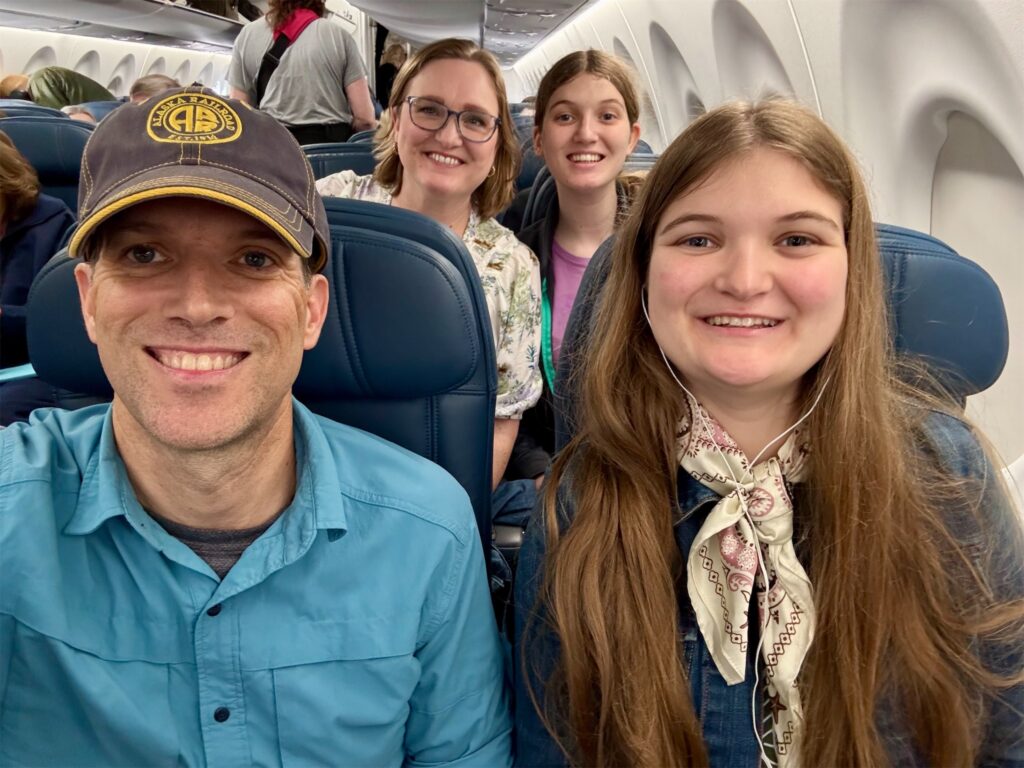
Flight to Fairbanks
We met up with Papa and Claudean in Seattle at our gate, and then had just enough time to wolf down a boxed sandwich for lunch. Papa and Claudean had come out a day early to visit with Claudean’s grandson Cole. Unfortunately, Ben and Patsy were delayed in Atlanta, which caused them to miss the connection in Seattle. Their plane was pulling up to the gate as we were leaving. They will now be arriving in Fairbanks later tonight.
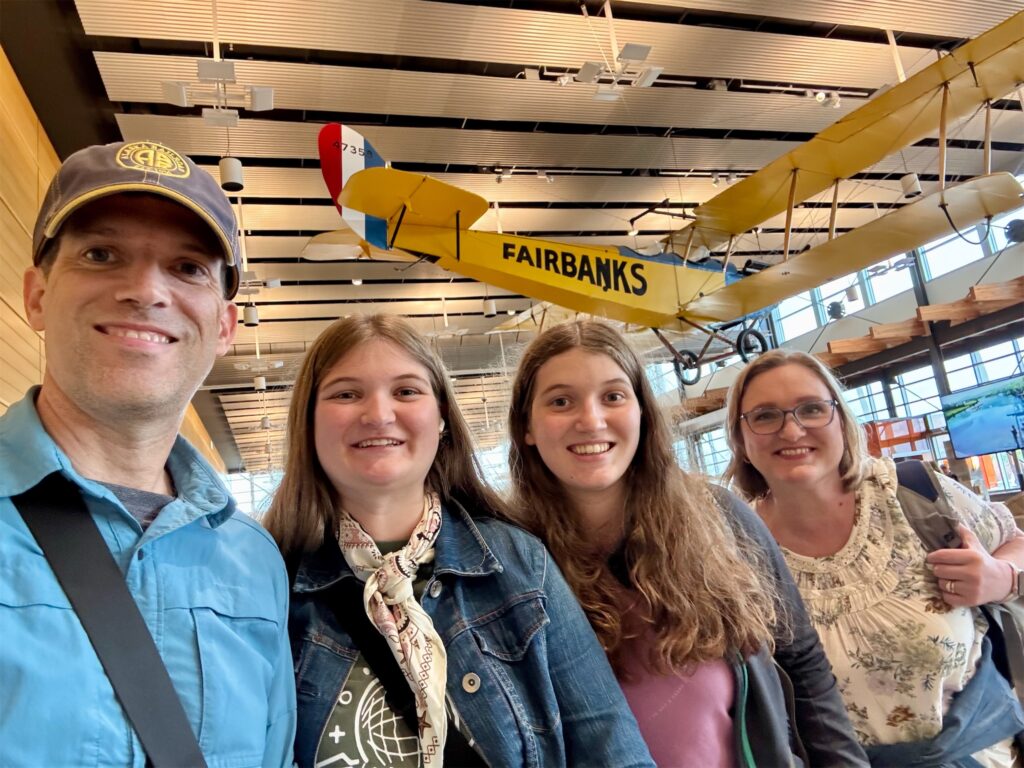
At the airport in Fairbanks
On arrival in Fairbanks, we boarded a motor coach for the short trip to the Fairbanks Princess Riverside Lodge where we will stay the next two nights.
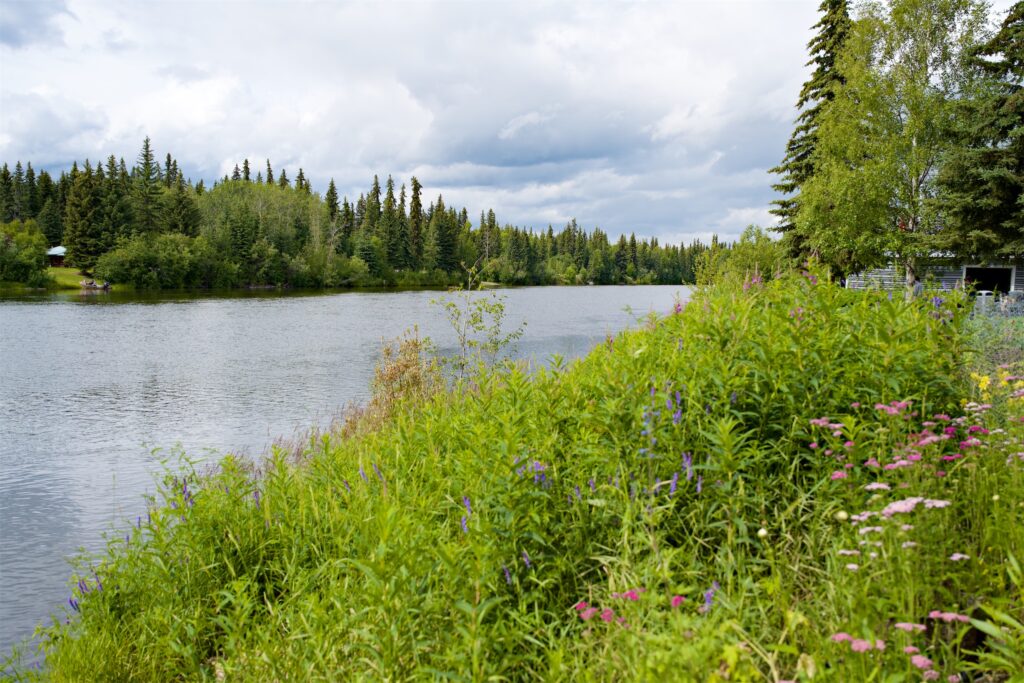
The Chena River
It was about 2pm AKDT when we arrived, and we spent a little time walking around the lodge and along the Chena river until our rooms were ready.

Dinner in the Edgewater Restaurant
We got into our rooms just after 3pm, but did not yet have our luggage. We decided to just chill until we met Papa and Claudean around 5pm for dinner in the Edgewater Restaurant at the lodge. I had not eaten much all day so ordered a smoked half-chicken, which was delicious.
It was a beautiful view and good conversation after a full day of travel. After dinner, we finally had our luggage, so I decided to go for an evening run with the temps in the low 60s.
It was somehow sunny enough for me to need sunglasses, but rained the whole way. It was also deceptively warm for the temps to be so mild. Weather in Alaska is something else, and so is the all-day sunlight. It never gets fully dark in Fairbanks this time of year. Sunset today is at 12:03am and sunrise is at 3:51am.
We went to bed pretty early to build a good foundation for the rest of the trip. Tomorrow we explore Fairbanks.
July 14, 2026 – Fairbanks
Our first touring day of the tip began with alarms at 8:00am and meeting up with Kate and Sara for breakfast in the Seasons Cafe inside the lodge. We all had breakfast sandwiches and various types of hot drinks (mine was a plain latte). While eating in the lobby, we saw Claudean for a few minutes and then got to see Patsy and Ben for the first time.

On the motor coach with Patsy and Ben
After catching up, we headed back to the room to get ready to load the bus at 9:40. Once on-board, we met our driver and guide, Ryan Hales, who is from Garland Utah. He is a recent graduate of BYU who will soon be continuing his studies with graduate work at Texas A&M this fall. As we pulled out on the way to our first stop, he told us a little about the city of Fairbanks.
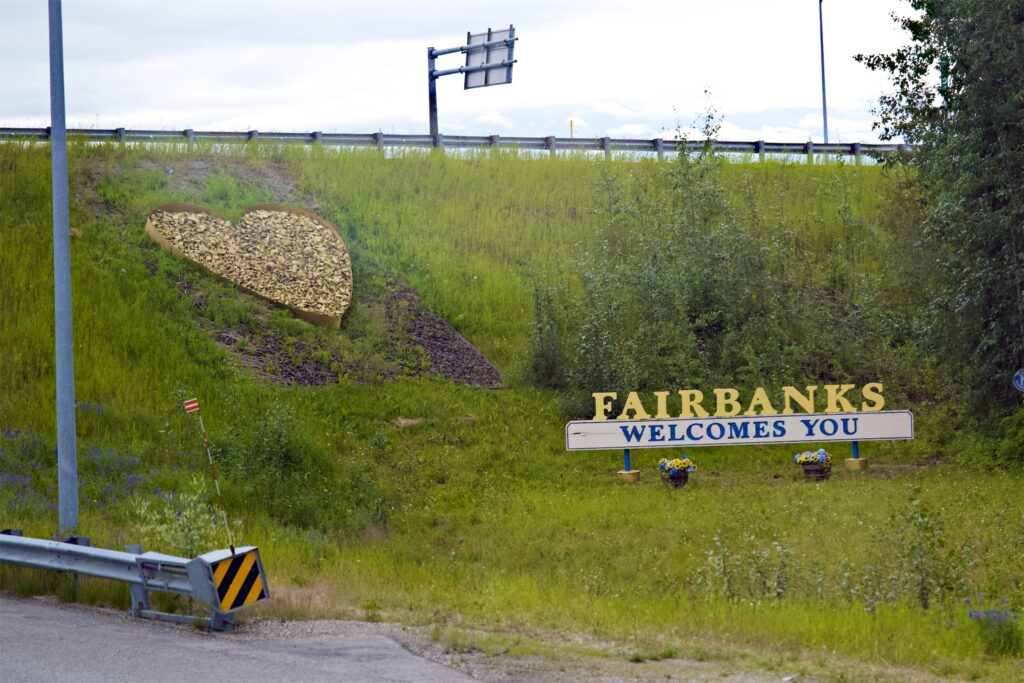
Sign entering Fairbanks
It is known as the “Golden Heart City”, both because of its association with gold dredging and mining, and because it is a city that supports lots of rural brush villages. The villagers will make flights to Fairbanks to load up on supplies because they are so much cheaper than in their villages. For example, current prices in the villages are $18 for a gallon of milk, $15 for a loaf of bread, and gas is around $35 per gallon. Our guide said that the last time he was in one of these villages he saw a Snickers Bar for $15, and the cashier said they only receive a shipment of them once per year.

Kate and Sara on the motor coach
Ryan also explained to us about “Frost Heaves”, which are humps in the roads caused by melting permafrost below the asphalt. We went across a few of those on our trip today. He said that this past winter was especially harsh in Fairbanks. The temperatures were below freezing for 151 days, and it was less than -40º F for a month. However, Fairbanks only receives 12” of rain (as snow or rain) per year due to the dry climate. Even with that, the snow will stay piled up for months. Fairbanks is only 160 miles south of the arctic circle.
Along the way we saw the northernmost Walmart and Costco stores, and Ryan showed us several business with power poles at every parking spot. This is for engine block heaters that are needed during the winter months while in these businesses shopping. Almost every vehicle you see in Fairbanks has power cord hanging out the front from under the hood.

The Trans-Alaska Pipeline
We also got our first glimpse of the Trans Alaska Pipeline from the bus, which we would learn a lot more about a few minutes later.
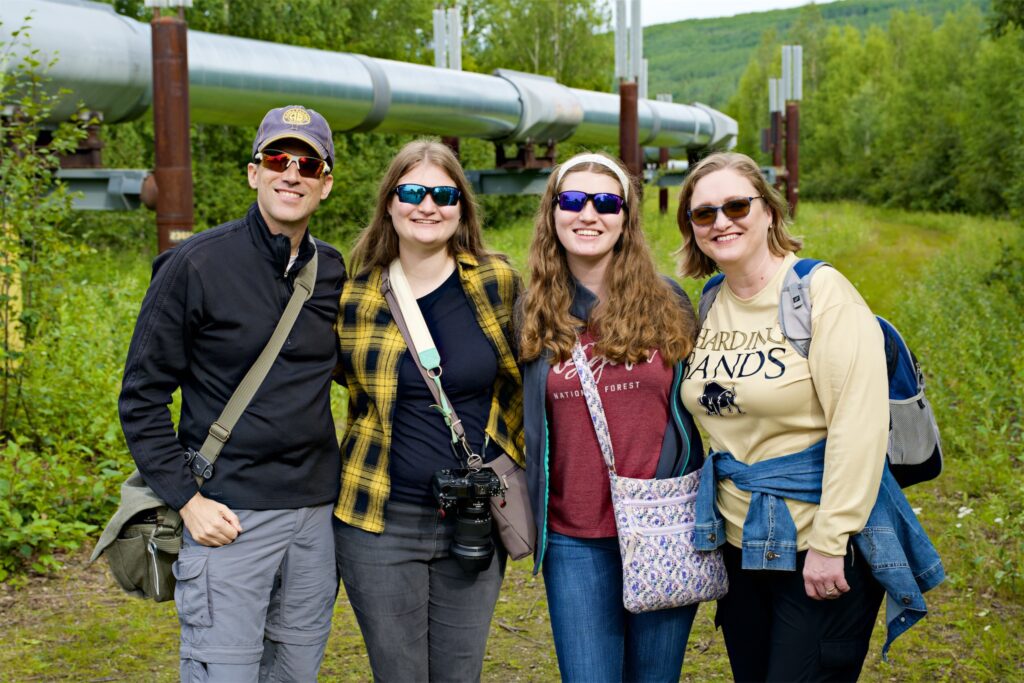
Team Agee at the Trans-Alaska Pipeline
Shortly after seeing the pipeline, we arrived at Gold Dredge No. 8 for our tour. Our first stop was to see a section of the Trans Alaska Pipeline up close. At the pipeline, we met Paxson who was our guide for the tour. He is a native of Fairbanks and his grandfather worked on the pipeline. He explained that 450,000 barrels of oil are transported via the pipeline and loaded onto tankers. The oil is never actually placed in barrels, but this is a unit of measure, which is equivalent to 42 gallons. The pipeline traverses three major maintain ranges and three jet turbines are employed to push the oil over the mountains.
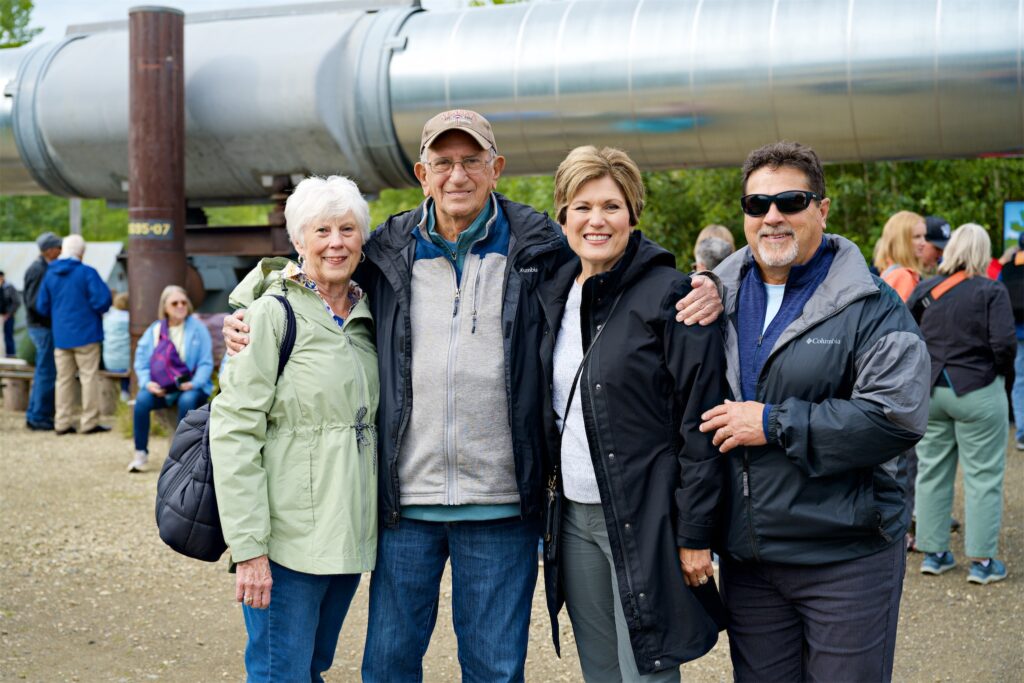
Papa, Claudean, Patsy, and Ben at the Trans-Alaska Pipeline
It took three years and over 70,000 workers to complete the 800 mile pipeline (1974 to 1977). 420 of these miles are raised above land due to permafrost. It was also built in a zig-zag pattern to account for the major temperature changes. The oil that is transported in the pipeline is 180 degrees Fahrenheit, which actually causes caribou to congregate around the exposed pipeline while migrating during their mating season.
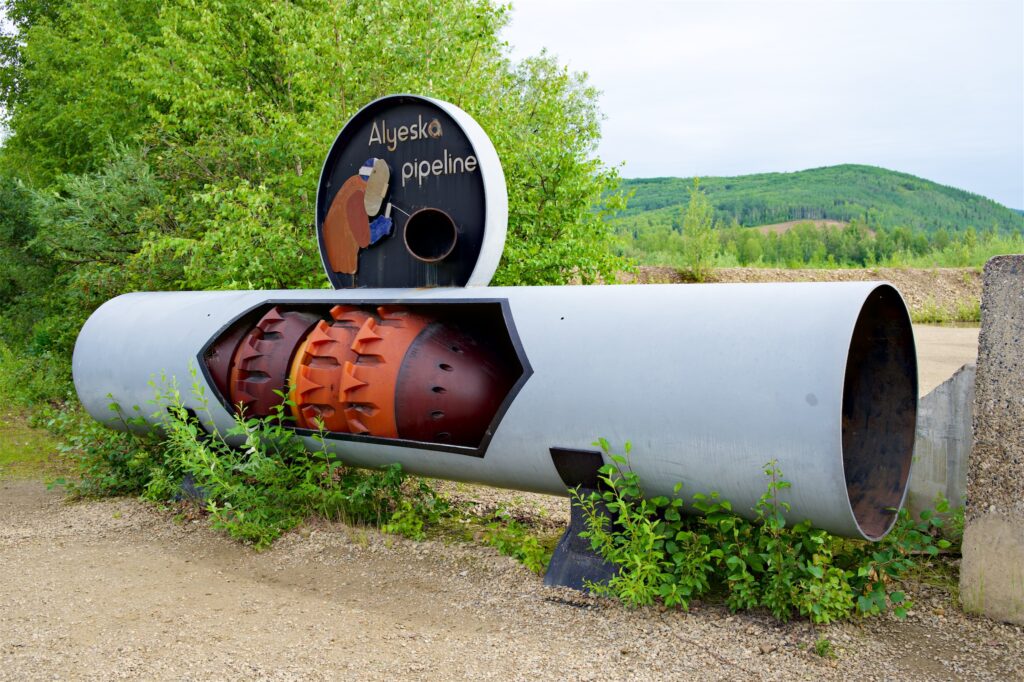
“Dumb Pig” used to clean the pipeline
He showed us an example of a large orange, rubber devices that is loaded into the pipeline for cleaning. This is called a “dumb pig” and is used to scrape away salt, sand, and petroleum jelly from the pipeline every two weeks. It is called a “dumb pig” to distinguish it from the “smart pig”, which is loaded with sophisticated electronics to detect corrosion twice per year.

Paxson explaining the process of dredging and mining for gold
After the presentation we all boarded a small train for a ride to Gold Dredge No. 8. Along the way, Paxson explained to us how gold was discovered in northern Alaska back in the early 1900s and how it was dredged from the “paydirt” layer. The whole route of the train traveled on land that had previously been dredged extensively to the point where it is now 150’ lower than what it would have been originally.
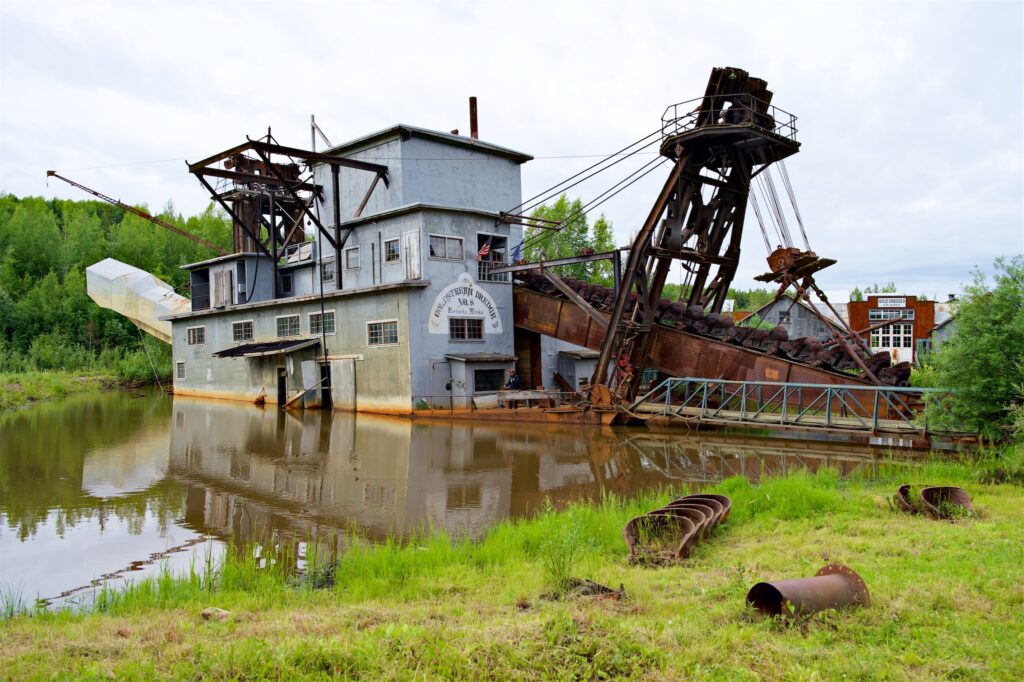
Gold Dredge No. 8
Once we arrived at the Goldstream Gold Dredge No. 8, Paxson explained how the dredge was used to mine for gold. This particular dredge is eight stories tall and was in use for 31 years from 1938 to 1959 (stopped for WWII). In all the time of it’s use, it only traveled four total miles.

Panning for Gold
Next they gave us a demonstration of panning for gold to prepare us for what came next. After the demonstration, we took the train around to the back of the dredge where all of us got to give it a try. We were each given bags of rock and dirt to place in our pans. After some dunking, shaking, dipping, and swirling, we were each left with some tiny flakes of gold.

Gold!!
Of our family, Kate got the most with $29 worth of gold (I was last with $9). Patsy and Ben combined for $100!! While the panning is very touristy, it’s also pretty fun. Next we enjoyed some coffee, hot chocolate, and cookies before touring Gold Dredge No. 8 on our own. The dredge was a bit much for Olivia with her claustrophobia, so Sara, Kate & I explored the structure.

At the controls of Gold Dredge No. 8
Once we heard the whistle, we boarded the train for the short ride back to the entrance by the pipeline. We boarded the bus and then headed toward our afternoon river cruise.
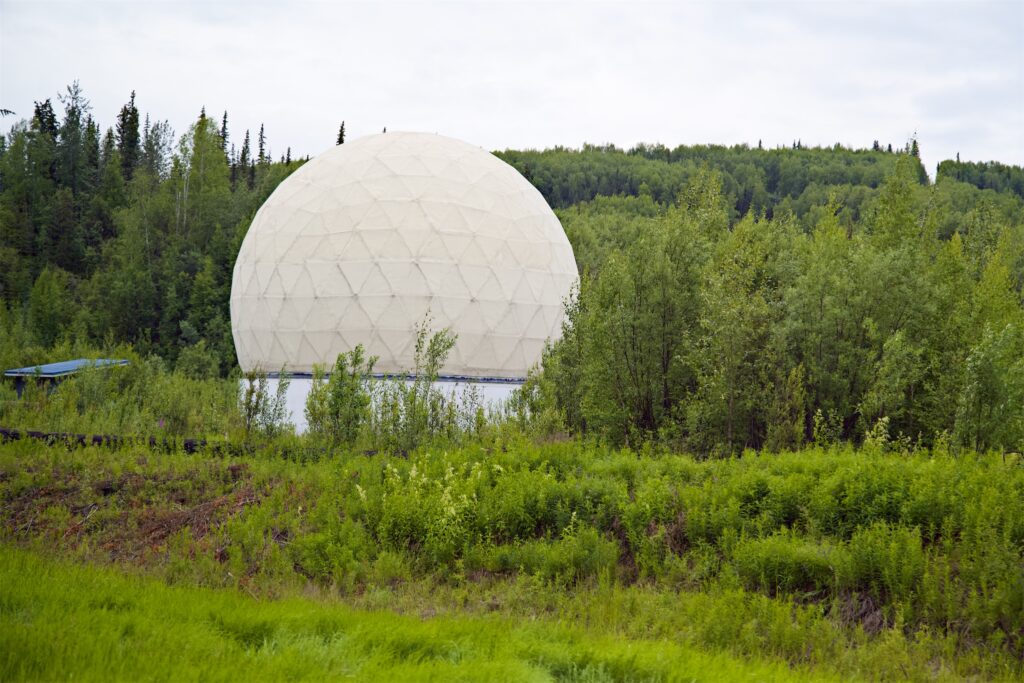
A radar dome that is used to track both the northern lights and ICBMs
On the way we saw a radar dome that is used to track both the northern lights and ICBMs. We also saw the northernmost McDonald’s
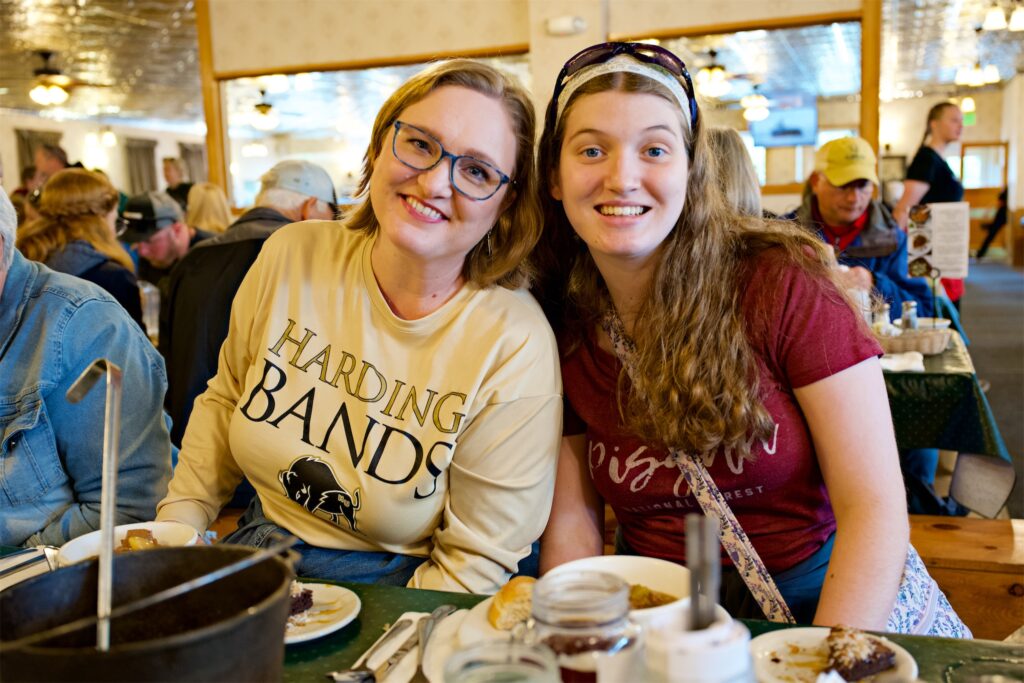
Lunch at the Discovery Center
It took about 30 minutes to reach the Discovery Center where we had lunch and then boarded the Discovery III Riverboat. Lunch was family style beef stew, roasted vegetables, and kale salad. All of it was delicious.
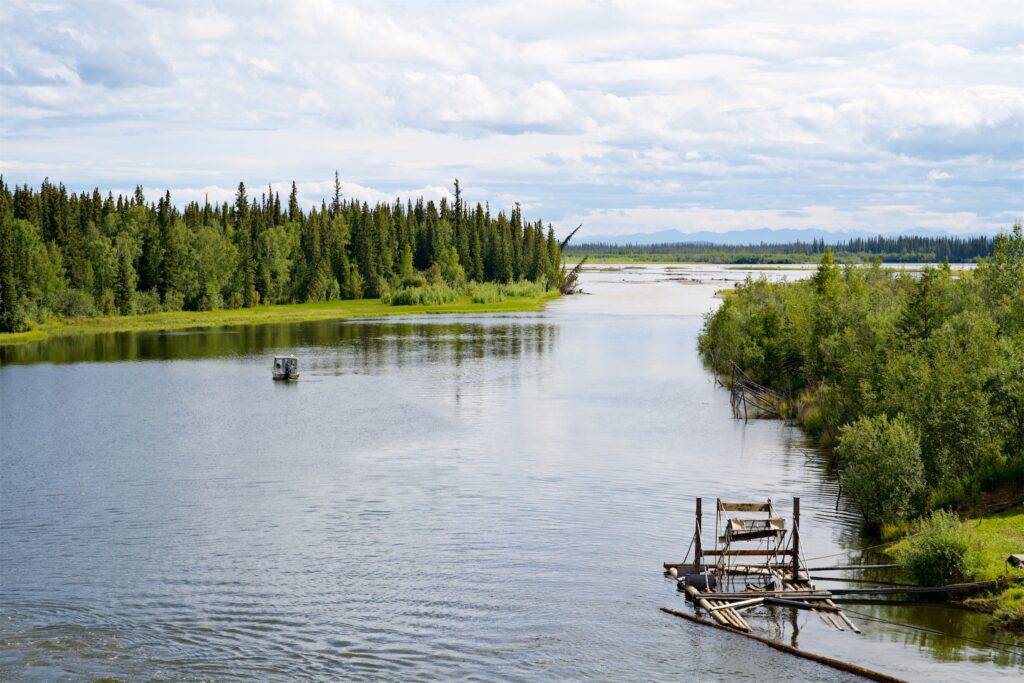
The Chena River
After lunch we boarded the Discovery III for our beautiful cruise up the Chena River. Our guide for the trip was Noah who is a native of Fairbanks.
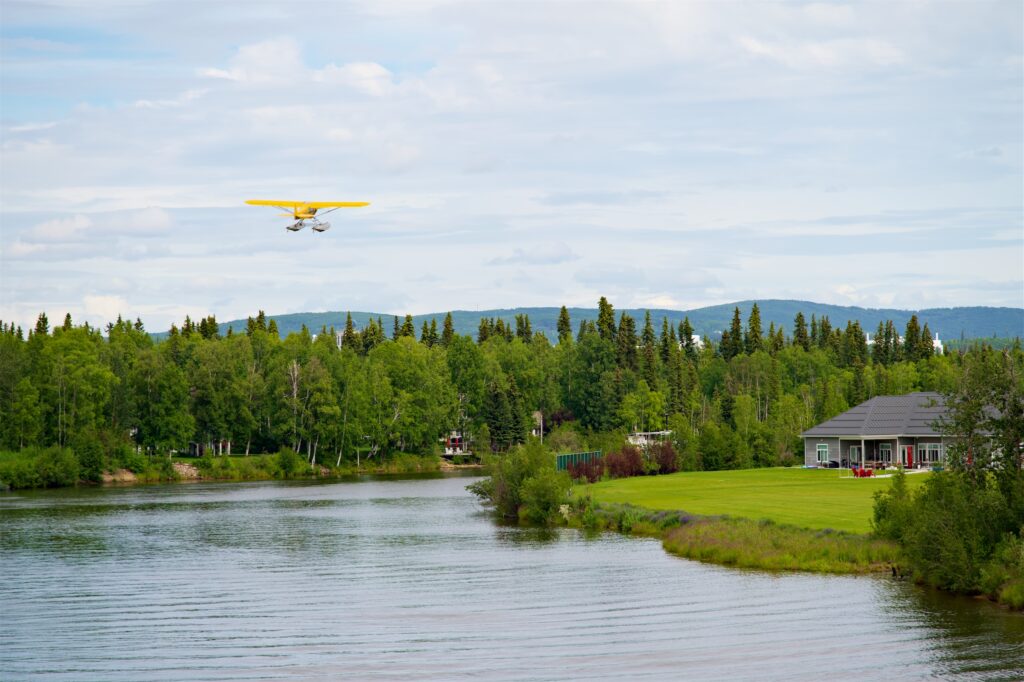
Float Plane taking off from the Chena River
Along the way we saw a float plane demonstration, which was super cool. Lord willing we will be taking a float plane to Taku Lodge in Juneau next week.
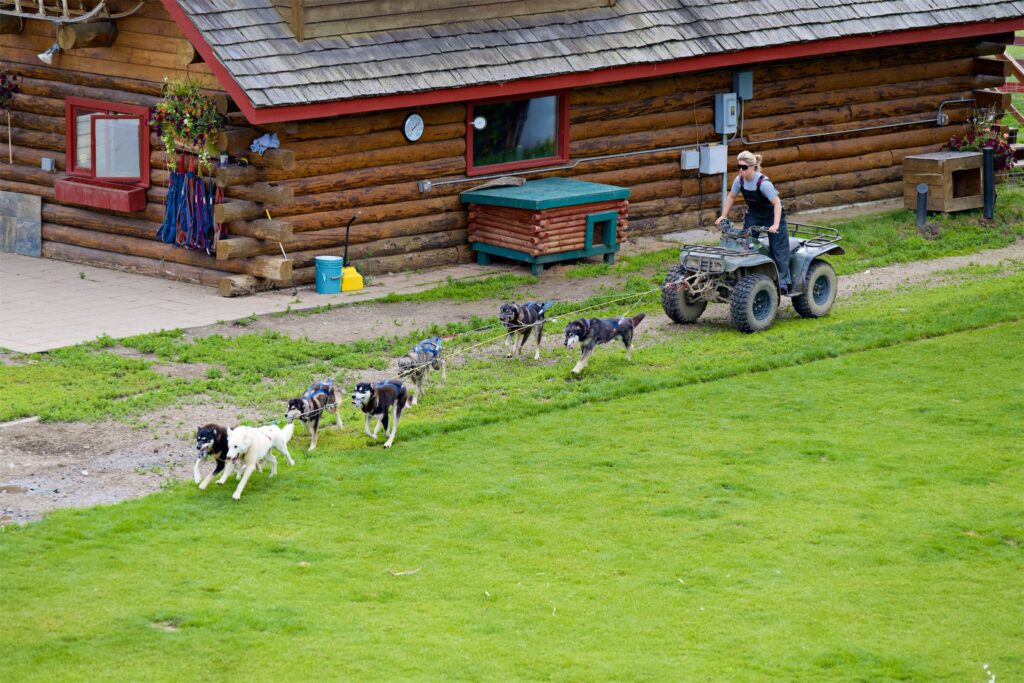
Sled dog demonstration
Later the boat stopped along the bank for a sled dog demonstration by Tekla from the Trailbreaker Dog Kennel. Tekla is the daughter of four time Iditarod champion Susan Butcher. The dogs pulled a motor-less four wheeler along a half mile track around a small lake. After they finished, the dogs all ran down the bank for a splash in the Chena River.
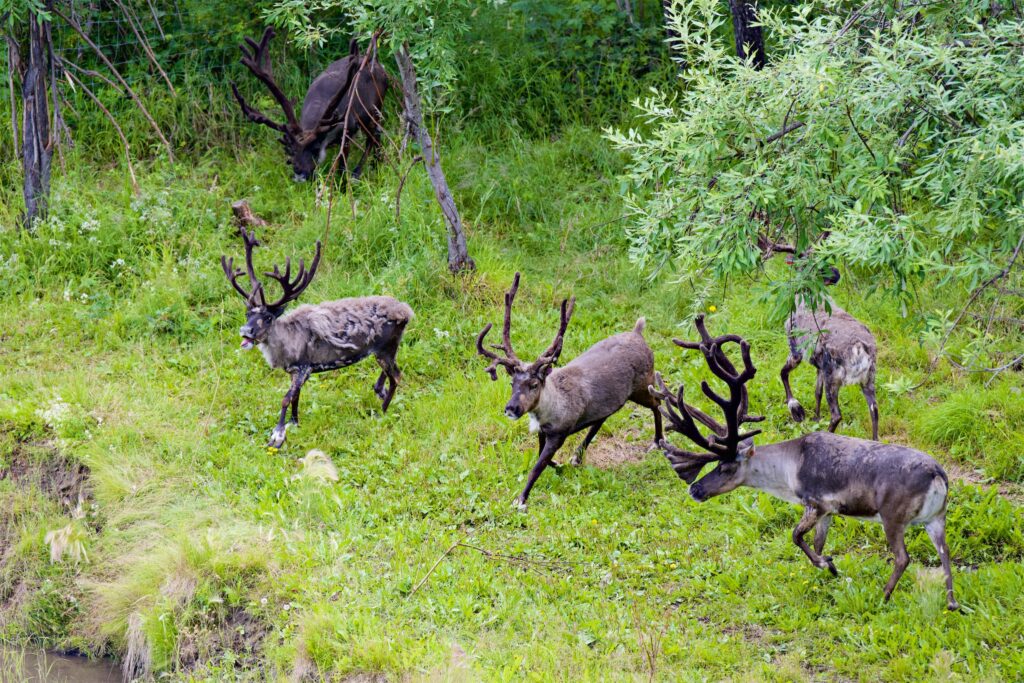
Caribou along the Chena River
Along the way, Noah gave us some additional facts about Fairbanks. The record low temperature is -72° and it frequently reaches the 80s and 90s in the summer. The average age in Fairbanks is 28 primarily due to two military bases and the University of Alaska Fairbanks. We saw some caribou along the river just before we turned around.
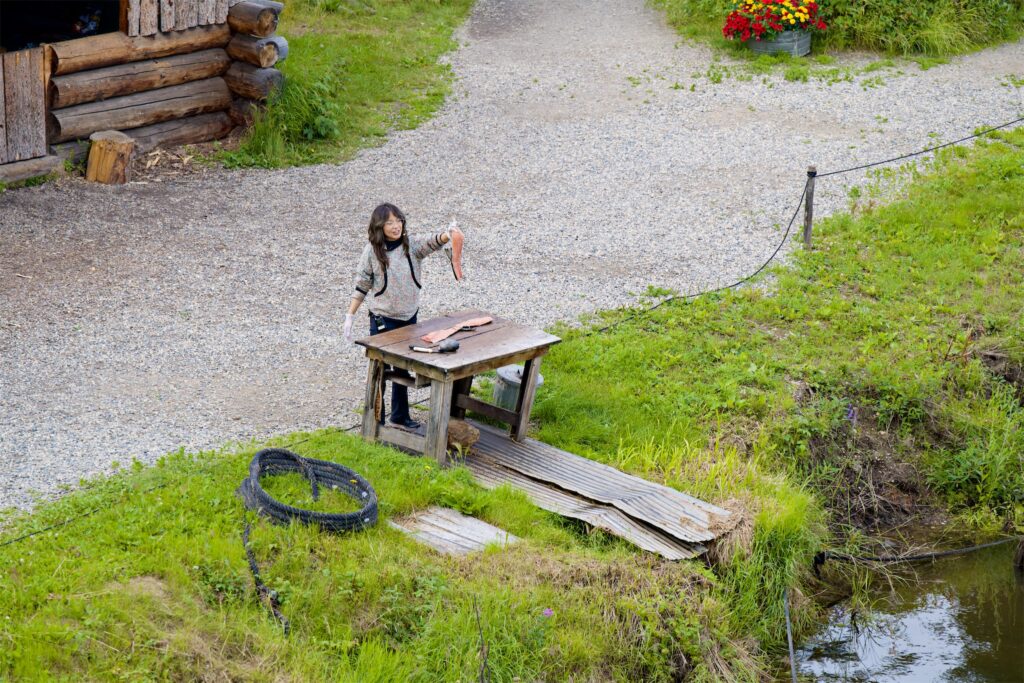
Fishing demonstration
On the way back, the riverboat stopped again along the bank where Leo gave us a demonstration of how the native Athabaskan people catch, prepare, dry, and smoke salmon. She also told us about the different kinds of salmon such as king, silver, and sockeye.
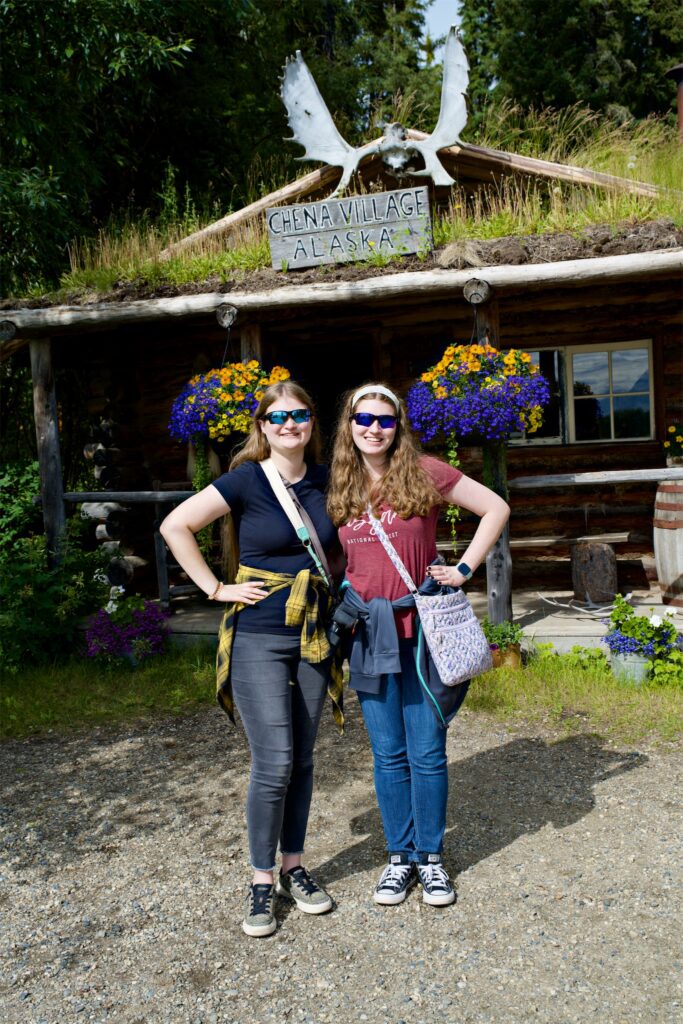
Kate and Sara in Chena Village
Next we got off the riverboat for a tour of Chena Village in Tanana Valley, which is a recreated native Athabaskan Village. At our first stop by a recreated cabin, Caden and Leo, both of Athabaskan descent, talked about native ways of hunting moose.
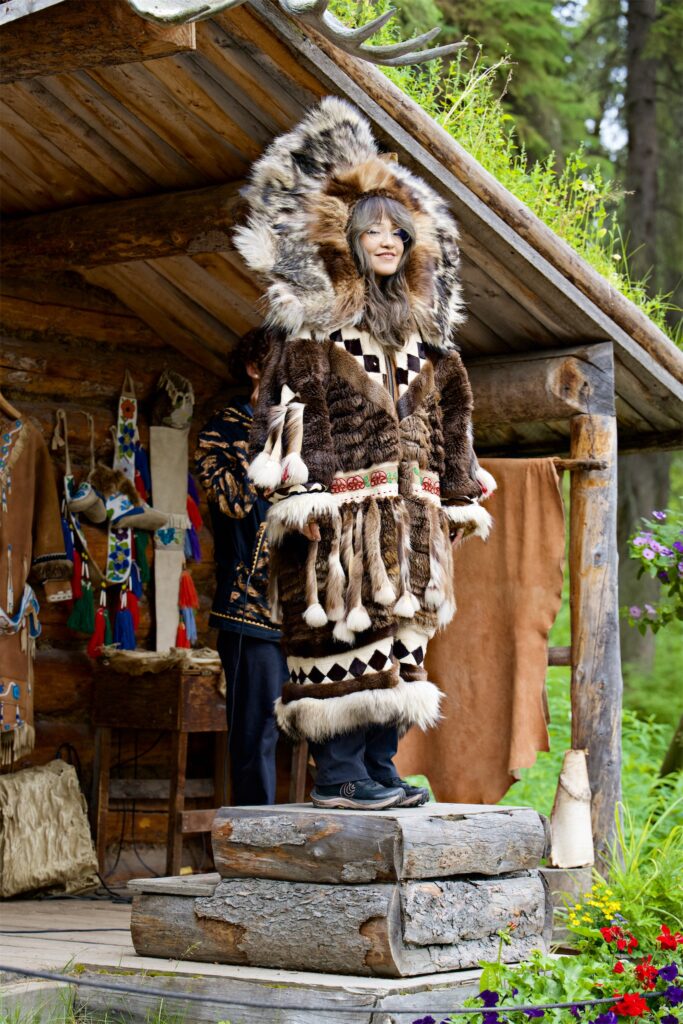
Native clothing demonstration
They also talked about tanning hides and the use of hides and furs in making clothing. At the spot we were also able to see hides of a grizzly bear, moose, and a caribou.
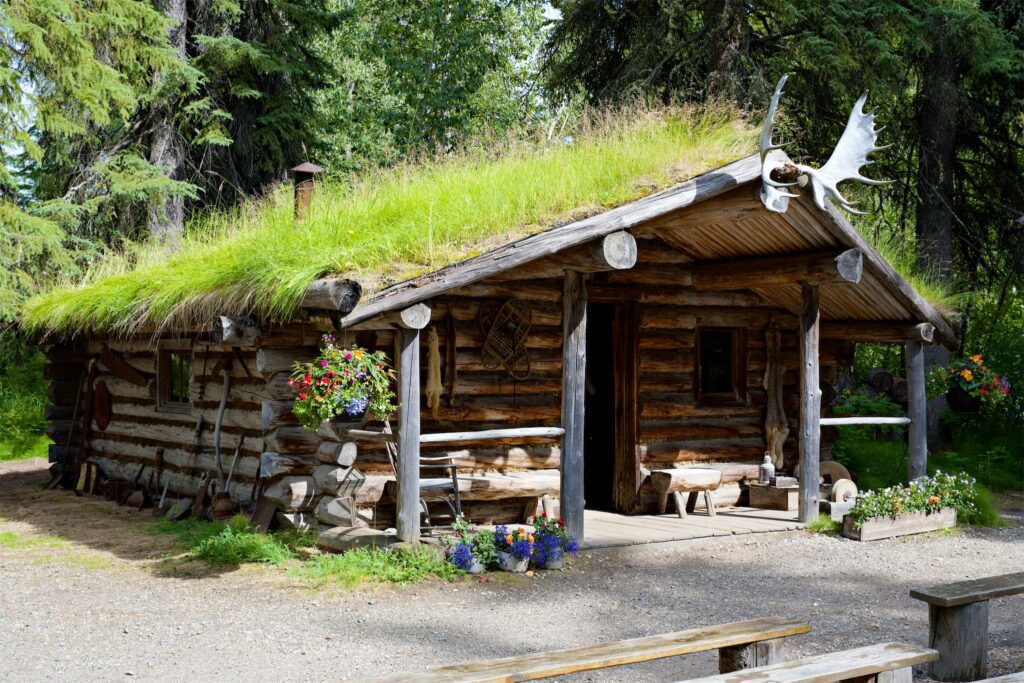
Spruce log cabin
Our next stop was at another cabin and a cache for storing supplies. Caden explained that these represent the life of the Athabaskan people after western contact in the early 1900s. The structures were built out of spruce logs. The caches were on stilts to protect supplies from wildlife. The roofs were covered in bark and mud to seal them and then grasses were sown to keep the mud from eroding.
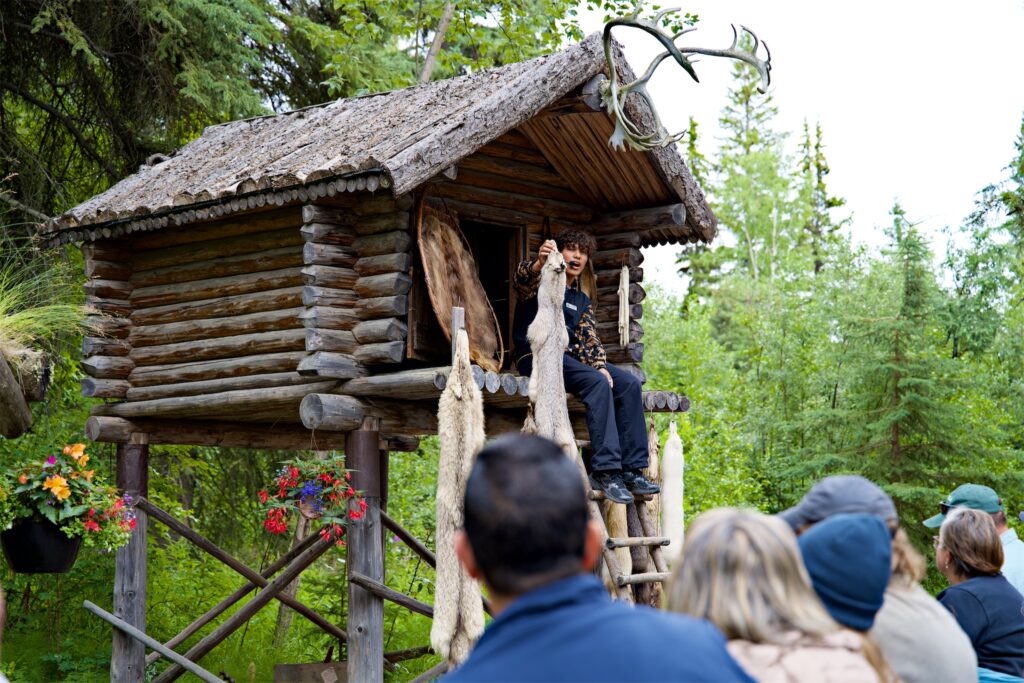
Spruce log cache and animal pelts
Caden also showed us a number of different animal pelts such as foxes, minks, and wolverine. He said that a wolverine can take down moose or caribou on their own (Not sure I believe this).

Birch canoe and show shoes
Our final stop was to explain about how the Athabaskan people lived before western influence. Caden showed us a caribou hide hut or tent (Athabaskans were nomadic), a birch bark canoe, and a birch bark baby basket. At this spot we were also able to see some caribou up close.
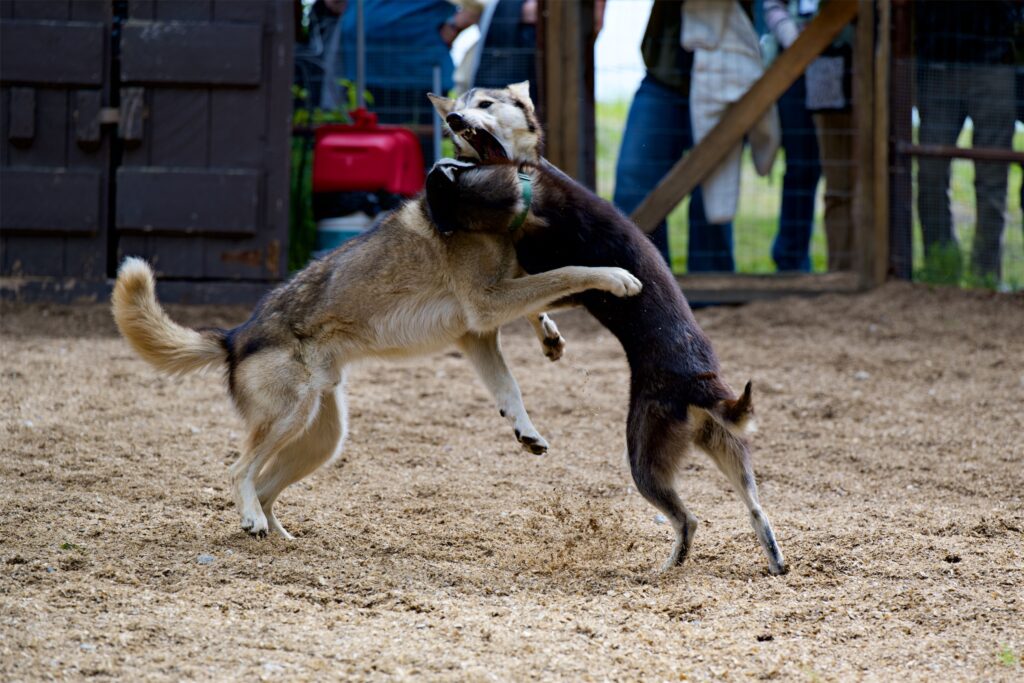
Two of the Alaskan Huskies from the Trailbreaker Kennel
Next we had some free time, so we went for another sled dog demonstration from one of the trainers at Trailbreaker Kennel. She had three dogs with her from age one to age 12. She explained that even though Alaskan Huskies are lean, they are able to pull four times their body weight and live outside year round. The dogs were very playful and some of us (not Sara) were even able to pet one.
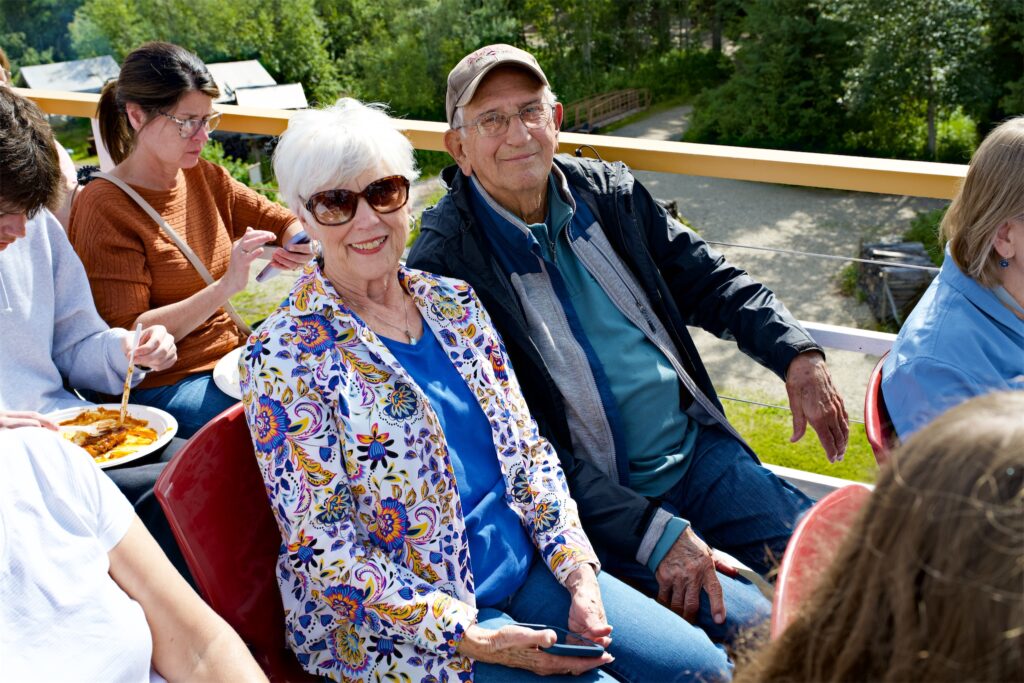
Papa and Claudean on the Discovery III
Back on board the Discovery III we enjoyed some smoked sockeye salmon, which was delicious. I ended up having three pieces. Sara reluctantly tried it and then ended up going back for seconds. Kate had four pieces and Olivia obstained.
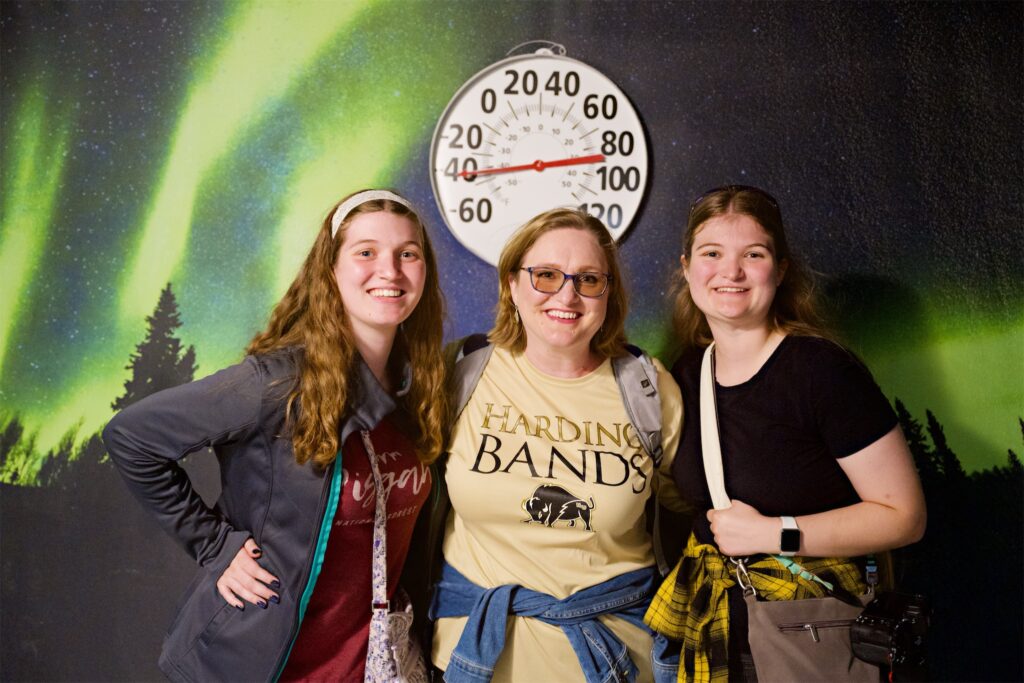
In the “40 Below” room
Back at the discovery center we tried out their -40° Below room for a few minutes. It was very cold but not as cold as I expected.
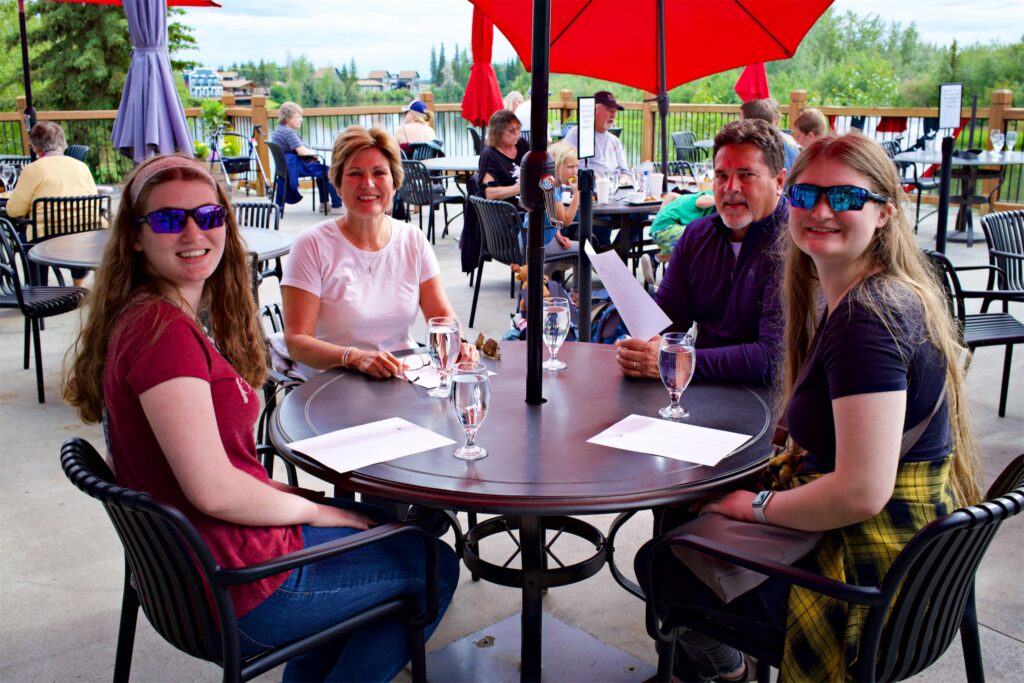
Dinner on the Riverview Deck
After leaving the Discovery Center, we boarded our bus back to the Fairbanks Princess Riverview Lodge. At the lodge we said goodbye to Ryan and then headed to the room to cleanup. We had dinner outside on the Riverview Deck beside the beautiful Chena River. I enjoyed some delicious grilled sockeye salmon.

Our whole group on the deck by the Chena River
Finally, we said good night to our group and then I got a cafe latte from the Seasons Cafe before heading back to the room for the evening. We decided to turn in early because our bus tomorrow for the Alaska Railway leaves at 7:00am.